This article was featured in the official IMPA publication - Supply Chain and Sustainability Magazine, Issue 3 2025
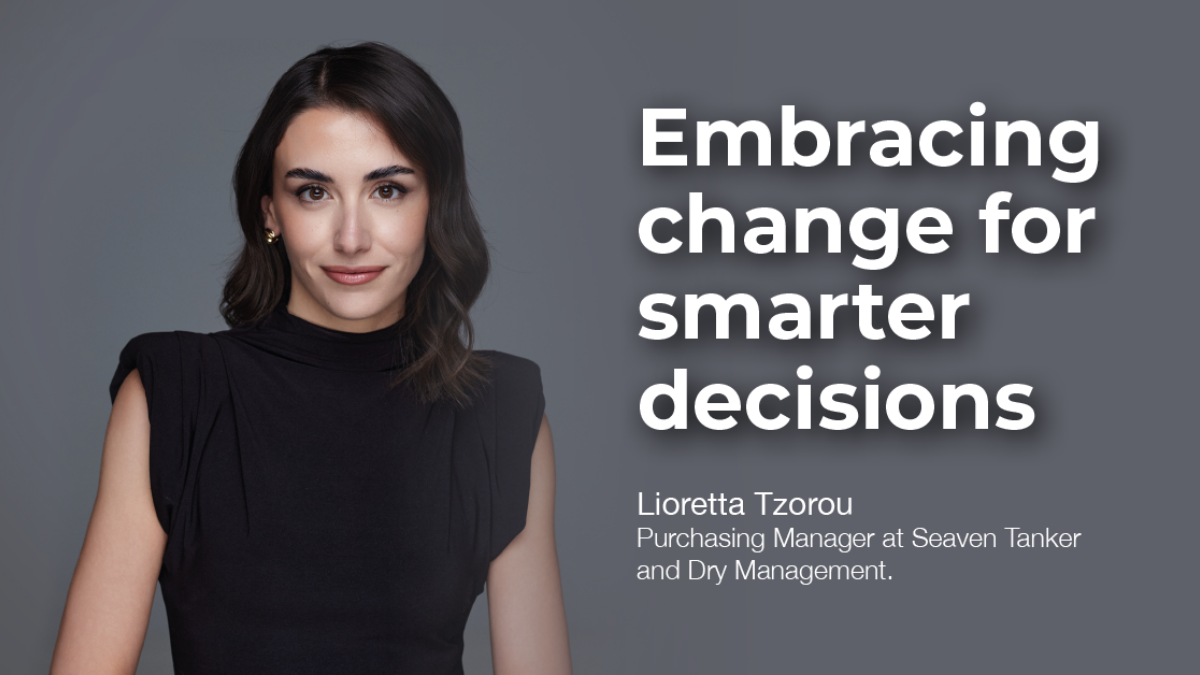
When Lioretta Tzorou joined Seaven Tanker and Dry Management in 2018, the company had a fleet of nine vessels. Seven years later, the fleet has more than doubled in size, with Seaven owning 20 vessels. The company still operates from a single head office in the heart of Piraeus, in Greece – as she says: “Having all departments under one roof allows for faster decision-making, closer collaboration and efficient internal communication.”
Originally founded as Evia Petrol in 2003, the company was renamed to reflect its ability to travel across the seven seas. The Seaven fleet – made up of small and medium-sized Greek-flagged oil/chemical tankers and cement carriers – is chartered out mainly for trade in the Mediterranean, Black Sea and North Europe ports, but is not limited to these regions.
Being part of Seaven’s steady growth has been incredibly rewarding, says Lioretta. “In addition to expanding the fleet, Seaven has been heavily focused on operational improvements across all departments. We are investing in digital solutions, enhancing our internal procedures and streamlining our processes.”
After gaining a degree in Maritime Studies from the University of Piraeus, she began her career in shipping in 2011, working in sales at a trading company specialising in marine spare parts. This, she says, gave her solid exposure to the commercial side of the business. Next, she joined a navigation aids provider, handling customer service and supporting clients with digital and paper navigation products including charts, publications and software.
From there, she made the transition to ship owning when she joined Seaven as a Spares and Stores Purchaser. “Beyond the day-to-day responsibilities, I was tasked with building the department from the ground up; establishing procedures, organising workflows and implementing key processes,” she explains. “After two-and-a-half years, I was promoted to Purchasing Manager. Working on both the supplier and shipowner sides has given me a well-rounded and practical understanding of the supply chain and procurement challenges – which I apply daily in my current role.”
Being part of Seaven’s steady growth has been incredibly rewarding. In addition to expanding the fleet, Seaven has been heavily focused on operational improvements across all departments. We are investing in digital solutions, enhancing our internal procedures and streamlining our processes
Seaven’s strategic procurement goals are achieving cost-effective solutions without compromising on quality or safety, while continuously improving internal efficiency. “We place strong emphasis on building and maintaining long-term relationships with trusted suppliers through performance evaluation and transparent communication,” says Lioretta. “A major priority is the digitalisation of our processes – moving toward a paperless, ERP-integrated workflow supported by KPI tracking and data analytics to enable more informed and strategic decision-making. Our procurement activities are closely aligned with operational needs and seafarer welfare, recognising that timely, reliable supplies contribute directly to vessel performance and crew wellbeing.
“We are also increasingly mindful of our environmental footprint, seeking ways to reduce unnecessary shipments, consolidate orders and source locally when possible.”
When it comes to the critical area of spare parts, quality, delivery time and cost are the most important considerations, says Lioretta. “We prioritise genuine or OEM parts when possible and always assess the urgency of the request. We also factor in logistics, especially location. Poor quality and unreliable delivery timelines are the main risks. A faulty part can cause major disruptions onboard, so we only work with trusted suppliers. Sudden delays in logistics can also lead to costly downtime.”
Each request is unique, she emphasises. “New parts are preferred but refurbished or used parts may be the only option for older machinery. In those cases, certification, testing and supplier reputation are key. We verify certifications, request test reports and rely on our network of established vendors. We maintain close communication with both suppliers and freight forwarders to ensure delivery is on track and adjust plans when needed.”
Inevitably, external factors are affecting procurement and supply chain management. “Professionals in the field need to be more adaptable, strategic and digitally aware than ever before,” says Lioretta. “Geopolitical issues, like the conflicts in the Red Sea and Ukraine, disrupt logistics and change supply routes, while sanctions and compliance rules make supplier selection more complex. As Seaven mainly trades within the Mediterranean region, Black Sea and North Sea, we are less directly affected by issues like United States tariffs or trans-Pacific disruptions, but global events still have indirect impacts on availability, lead times and pricing, making it crucial to stay informed and agile.
“Port congestion and changing freight costs also create challenges for delivery times and budgeting, while environmental regulations are pushing us to make greener choices in procurement.”
Digitalisation, she says, is both a challenge and an opportunity; yes, it requires investment, but in return it helps improve efficiency, transparency and long-term performance.
We prioritise genuine or OEM parts when possible and always assess the urgency of the request. We also factor in logistics, especially location. Poor quality and unreliable delivery timelines are the main risks. A faulty part can cause major disruptions onboard, so we only work with trusted suppliers. Sudden delays in logistics can also lead to costly downtime
Seaven is a company that embraces change, says Lioretta. “We are working toward a paperless workflow by the end of the year, aiming to simplify processes and reduce manual work. At the same time, we are focused on getting the most out of our ERP system – not just using it for placing orders but as a smart, data-driven tool for analysis and performance improvement. By tracking KPIs and generating reports, we can gain better insight into purchasing patterns, supplier reliability and cost behaviour, allowing us to make more informed decisions and negotiate smarter. One area we also value highly is crew feedback on the quality of spare parts delivered onboard – it gives us a real-world view of how our choices affect vessel operations and helps us continuously refine our vendor list. Overall, I believe digitalisation brings greater transparency, accountability and consistency to procurement, and the future lies in fully embracing these tools to work smarter, not harder.”
Sustainability at Seaven means operating responsibly, both environmentally and socially, across all aspects of the business, she says. “While we are continuously evolving in this area, we have already taken important steps such as upgrading to more energy-efficient equipment on board, reducing unnecessary shipments by consolidating orders, moving toward a fully paperless office and exploring local sourcing options to lower our carbon footprint. In line with broader industry trends, we also support initiatives related to eco-friendly fuels and bunker alternatives, as well as cleaner technologies where applicable. Sustainability isn’t a one-time project – it is an ongoing mindset we aim to embed in our everyday decisions, from procurement to vessel operations.
“I closely follow the work of IMPA and fully support its mission to promote ethical procurement practices and professional standards across the maritime industry. I stay up to date with IMPA’s news and make it a point to attend events and forums whenever possible to stay informed about developments in shipping and procurement.”
Seaven employs about 50 people across its departments. Finding the right people in such a demanding and fast-paced industry is not always easy – but essential for long-term success, says Lioretta. “I personally look for candidates who demonstrate a willingness to learn, a collaborative mindset and a proactive attitude. Experience is important but soft skills and team compatibility are equally crucial.”
For anyone embarking on a procurement career, her main advice is – never stop asking questions. “Curiosity and the desire to learn are key in this fast-paced field. Procurement is often underestimated but it plays a crucial role in the efficiency and success of a shipping company. If you're someone who enjoys solving problems, working across cultures and time zones, managing negotiations and making real-time decisions, procurement can be extremely rewarding. You will learn to balance quality, cost and time in a high-impact role. Also, always keep communication with other departments open and easy. The exchange of accurate and updated information can significantly improve the efficiency of your work and help you gain a broader understanding of vessel operations and company goals.”
Shipping has become more ‘trendy’ over the past few years, says Lioretta. “Procurement is a critical part of the industry and I would encourage universities and training institutions to offer more internships in this area – it’s a fantastic entry point into the maritime industry and a sector full of learning and growth opportunities.”
Read more articles like this: here
Coming soon interviews with Tse Hai Ng, General Manager, Marine Supply Chain for Kuok Maritime Group and Henning Wegner, Head of Procurement at Oldendorff Carriers
Read more articles from the IMPA BLOG | Subscribe to receive a digital copy of the IMPA Magazine