This article was featured in the official IMPA publication - Supply Chain and Sustainability Magazine, Issue 4 2025
Corrosion is a persistent challenge for shipowners, with the estimated collective global cost of corrosion to shipowners as high as US$80 billion, according to The Association for Materials Protection and Performance (AMPP). Beyond the enormous economic implications, corrosion has serious environmental impacts. Excessive or untimely repairs can result in wastage of materials, energy-intensive dockings, and unnecessary environmental disturbances.
To cut both costs and carbon, shipowners are turning to technologies that predict maintenance needs in advance. The Lab, Brookes Bell’s forensic analysis and investigative service, has introduced CMAP to help shipowners more easily evaluate the integrity of their vessels.
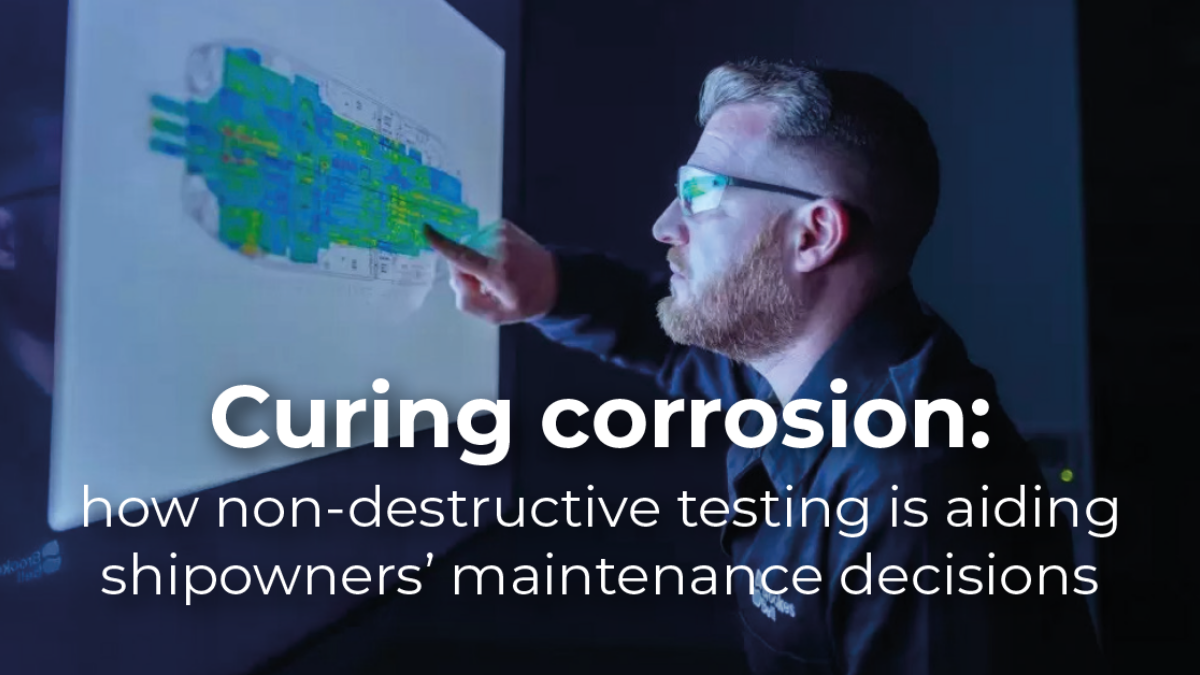
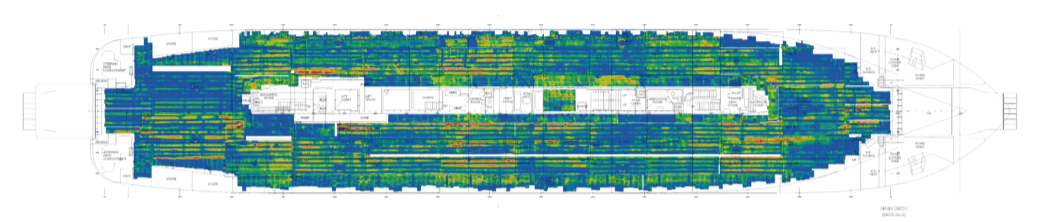
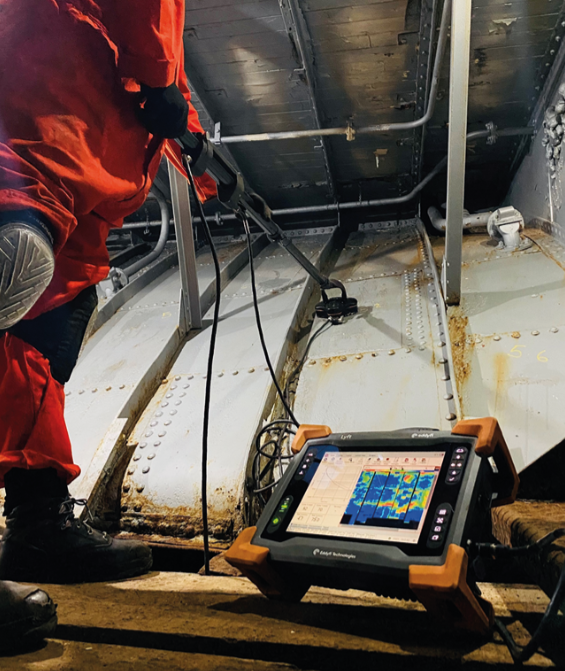
Utilising unique technological methods, CMAP accurately maps corrosion over entire vessel structures using a refined Pulsed Eddy Current Array (PECA) inspection technique paired with advanced 3D data visualisation software.
This state-of-the-art system creates a digital twin of the vessel’s steel hull plating, highlighting areas of material loss, remaining wall thickness, and even the degradation of protective coatings can be identified by signs of elevated corrosion and wastage rates. By moving away from traditional spot checks toward a holistic view, CMAP empowers operators to manage maintenance more effectively, thereby reducing both the environmental footprint and operational disruptions. In doing so, it helps shipowners shift from a reactive maintenance approach to one that is more forward-thinking and sustainable.
Owners have always known corrosion is expensive. What CMAP finally gives them is a crystal‑clear, ship‑wide view of that cost in advance. Instead of discovering corroded steel when a panel is already open in drydock, they see the problem months beforehand and can plan the work in a controlled, sustainable way.

“Owners have always known corrosion is expensive,” notes Arron Jackaman, Director of Non‑Destructive Testing Services and Inspection Engineering at Brookes Bell. “What CMAP finally gives them is a crystal‑clear, ship‑wide view of that cost in advance. Instead of discovering corroded steel when a panel is already open in drydock, they see the problem months beforehand and can plan the work in a controlled, sustainable way.”
“We engineered CMAP specifically for large commercial hulls,” Arron explains. “Some of the tankers and cruise ships we inspect contain twenty kilometres of welding and several square kilometres of steel plating. Trying to extrapolate a vessel’s overall condition from a handful of spot readings just doesn’t work at that scale. Digital‑twin reporting means every centimetre is accounted for, giving shipowners and classification societies the confidence to make data-driven decisions.”
Seeing more
One of CMAP’s core strengths is its use of Non-Destructive Testing (NDT) methods. Unlike conventional techniques that can sometimes require intrusive procedures or even cause further damage, NDT offers a safe and sustainable alternative. With CMAP’s NDT technology, the condition of the vessel is assessed without causing harm to its structure. This means that remedial actions are taken only when necessary, ensuring that resources are focused where they are truly needed.
“Non-destructive testing is, at heart, about prevention,” says Arron. “If you can detect thinning steel through coatings, insulation and fairing without stripping them away, you prevent the domino effect in which one repair triggers several more. That directly cuts waste, reduces solvent use, and keeps the vessel in service rather than sitting in a yard burning fuel on auxiliary generators.”
In the fight against corrosion, protective coatings are the first line of defence and play a vital role in preserving a vessel's integrity. Coatings and coverings such as SynDeck, Camrex, hull fairing compounds, as well as wooden or composite coverings, provide essential protection but degrade over time. Inefficient or premature replacement of these coatings can be both costly and environmentally detrimental.
CMAP’s digital twin technology and sophisticated visual dashboard deliver a comprehensive global overview of a ship’s condition, placing special emphasis on its protective coatings. By establishing the true state of these layers, CMAP enables shipowners to carry out repairs only when they are absolutely necessary. This level of precision reduces the consumption of paints and other chemical agents, both of which can have adverse environmental impacts if overused. This targeted maintenance approach promotes more responsible use of resources, lowers the risk of chemical runoff to ensure International Maritime Organisation (IMO) compliance, and minimises the environmental burden associated with the disposal of hazardous materials.
Smart insights
Another key environmental benefit of CMAP is its ability to facilitate proactive maintenance scheduling. Inspections can be carried out several months before a vessel is due to enter drydock. This advance notice allows management companies, shipyards, and operators to plan and coordinate repairs during periods where they with have the least impact on operations. By scheduling maintenance in this manner, emergency repairs—which often result in increased waste and energy consumption—can be largely avoided.
“We routinely deliver CMAP reports months before a scheduled yard stay,” Arron states. “Such lead time enables superintendents to order the exact quantities of steel, engage specialist crews, and sequence activities so that scaffolding is erected once rather than multiple times. The outcome is shorter docking periods, reduced energy consumption in the yard, and a marked decrease in waste material.”
Beyond immediate operational benefits, the environmental and economic advantages of CMAP to modern commercial vessels are significant in the long term. Reduced vessel downtime means that ships spend more time operating efficiently, which also indirectly decreases emissions associated with repeated drydockings and repairs. Additionally, by ensuring that only necessary work is undertaken, CMAP helps prolong the lifespan of critical assets. A longer asset lifespan translates to lower overall emissions per operational year, as the need for frequent replacements and overhauls is diminished.
Furthermore, a reduced need for extensive repairs means lower consumption of industrial materials. This conservation of resources is an essential aspect of environmental stewardship within the maritime industry and will only become more important over time. In a sector where material use and energy consumption are key contributors to environmental impact, the precision offered by CMAP sets a new standard for sustainable maintenance practices.
Looking ahead
Brookes Bell’s pioneering work in NDT has not gone unnoticed. The industry has recognised the benefits of CMAP through accolades, including awards from the Mersey Maritime Industry Awards. Such recognition underscores the service’s impact not only on improving maintenance practices but also on bolstering environmental performance. For shipowners, CMAP offers a reliable, data-driven method for assessing and maintaining vessel integrity. For the environment, it means a reduced carbon footprint, and a move towards more sustainable operational models.
“Industry recognition is gratifying,” Arron observes, “yet the real measure of success is when Brookes Bell helps a vessel departs drydock ahead of schedule with significantly less repairs or steel renewal than anticipated. Such an outcome delivers a substantive benefit to the shipowner’s balance sheet and produces a verifiable reduction in CO₂ emissions, particulate matter, and hazardous‑waste generation.”
Looking ahead, the integration of technologies like CMAP is expected to become increasingly vital as the maritime industry confronts stricter environmental regulations and the growing imperative to reduce emissions. As global attention focuses on sustainability, the proactive and precise services offered by CMAP could likely become standard practice in the maritime industry. By facilitating responsible maintenance decisions that have clear environmental benefits, Brookes Bell is setting a new benchmark for environmental stewardship within the industry.
.............................................................................................................................................................................
Read more articles like this: here
Read more articles from the IMPA BLOG | Subscribe to receive a digital copy of the IMPA Magazine