This article was featured in the official IMPA publication - Supply Chain and Sustainability Magazine, September / October - Issue 4 2025
Between 2008 and 2018, the shipping industry saw rapid growth with a 73% increase in vessel count and a 36% rise in transport work. But this expansion comes at a cost: ~3% of global GHG emissions, ~63% of daily ocean garbage discharge, and frequent oil and plastic nurdle spills.
While GHG emissions dominate the environmental conversation, plastic pollution remains a largely overlooked threat. Every year, 8-11 million tonnes of plastic enter marine ecosystems - some of it from the 50,000+ merchant vessels generating plastic waste through bottles, packaging, nurdles, ropes, PPE, containers, and various other sources.
Though MARPOL Annex V prohibits plastic discharge, enforcement gaps persist, allowing much of this waste to go untracked and unmanaged.
Most shipowners lack knowledge of the plastics being used on their vessels, their uses, and their management from pre-disposal to post-disposal. They often struggle to understand which plastics are essential for operational stability, safety, and protection. Additionally, they face challenges in identifying the best transitional approaches to meet crew needs and fostering a true commitment to reducing plastic consumption onboard.
Understanding and managing plastic onboard vessels isn't just about wanting to “do good”; it optimises inventory, supply chains, and waste capacity, cutting costs and mitigating legal & financial risks from accidental discharge or exceeding storage limits. This is an operational challenge, but also an opportunity for shipowners to do something impactful and to gain market differentiation in that process.
This age-old narrative of not prioritising plastics and waste in general is now being rewritten by organisations like Berge Bulk, a global leader in dry bulk shipping. With a fleet of over 100 vessels, Berge Bulk transports essential commodities across the globe, but it’s their approach to how they do this that sets them apart.
Berge Bulk's strategy to combat plastic waste
In 2018, Berge Bulk set their first plastic waste reduction target to cut plastic waste per vessel by 25% by 2021 (from a 2017 baseline). By the end of 2021, they exceeded their target, achieving a 30% reduction in plastic waste per vessel. To keep the momentum going, Berge Bulk committed to a further 25% reduction in plastic waste by the end of 2025 (from a 2021 baseline).
At Berge Bulk, we understand that combating plastic pollution is crucial to keeping our oceans healthy. It is a key part of our commitment to sustainable shipping and protecting the vital marine ecosystems we operate in
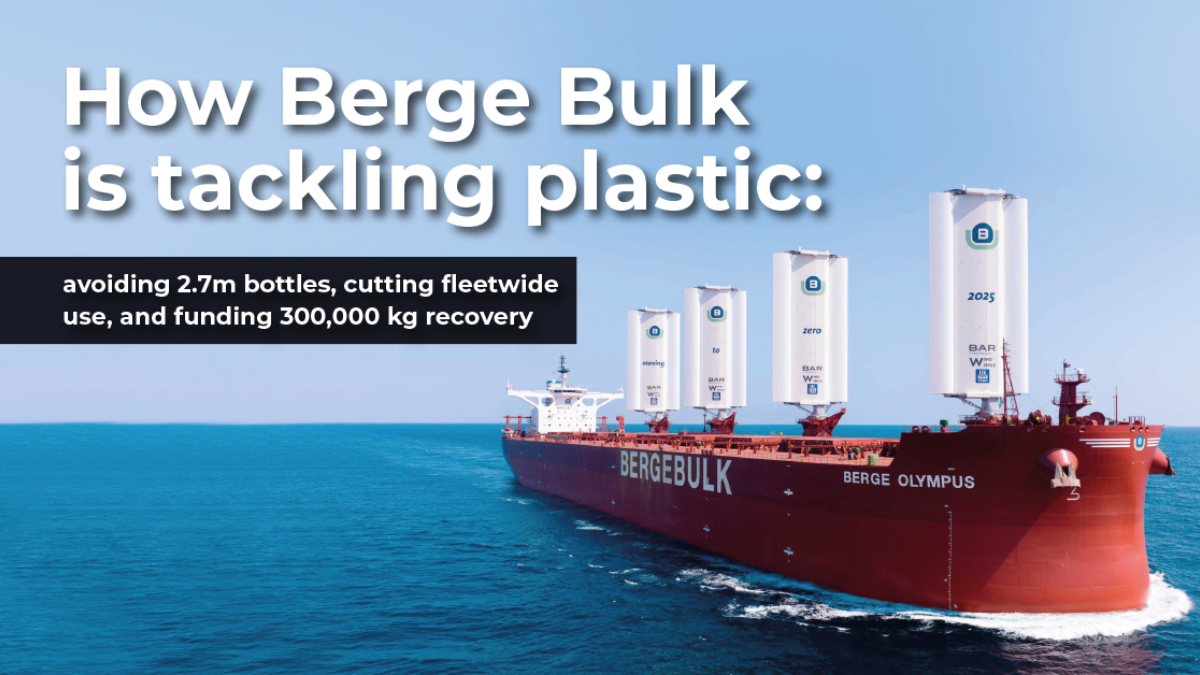
A crucial step in their success was the phasing out of bottled water across their fleet. What started as a project to install water purification units on their vessels in 2019, culminated in a fleetwide ban on plastic bottled water in June 2024. By the end of 2024, almost 100% of vessels were bottle-free, and 2,785,945 plastic bottles had been avoided fleetwide since 2019.
This strong foundation of performance tracking, infrastructure upgrades, and industry leadership positioned Berge Bulk as a sustainability frontrunner in the maritime sector. The next step was to scale these efforts further with greater data, deeper insights, and wider impact.
This led them to seek out a partnership with Seven Clean Seas: an ocean impact organisation that recovers and treats plastic waste at scale. They remove millions of kilograms of plastic from the environment and create fair and formal employment for hundreds of waste collectors. They also help organisations globally measure and reduce plastic use.

Expanding impact beyond plastic bottles
Berge Bulk understood early on that you can’t manage what you don’t measure and that the next frontier in reducing plastic waste wouldn’t come from ad-hoc changes. It would require system-wide transformation. This meant going beyond behavioural nudges or equipment upgrades, and instead using robust data, detailed analytics, and crew-centred insights to drive decision-making.
That’s where Seven Clean Seas’ experience and expertise came in handy. The project began with a fleet-wide plastic audit of plastic waste samples (roughly ~17,000 waste items) from three distinct Berge Bulk vessels - collected over a period of one month. Following this plastic waste profiling audit, a thorough analysis of EMS-sourced Category A plastic waste data was conducted. This analysis identified the types and volumes of plastics utilised, and the underlying reasons for their use - ranging from procurement practices to operational requirements.
To complement the waste audit, Seven Clean Seas engaged with 101 crew members across 43 vessels and across different departments, roles, ages, and nationalities - bringing together crew, vessel management, procurement, and sustainability teams.
From this, Seven Clean Seas delivered a set of clear actions: 1) Pinpoint plastic hotspots; 2) identify key behavioural and operational drivers; and 3) help set baselines, KPIs, and live performance dashboards.
The Berge Bulk team has been at the forefront of plastic pollution mitigation and reduction. Sampling waste from their vessels was no easy feat, but it was the necessary action required to determine real-world solutions to combating plastic pollution

Following the comprehensive waste audit, Berge Bulk is now taking the next steps to tackle plastic waste on board its fleet. Equipped with an in-depth understanding of their major sources of plastic waste, Berge Bulk has organised Supplier Engagement Workshops with its key suppliers that cover almost all catering and logistics services across their entire fleet.
The workshops will facilitate brainstorming for practical, actionable and needle-moving solutions tailored for each plastic waste category that had been identified through
the audit. This exercise will help Berge Bulk establish a data-driven strategy, with buy-in from key stakeholders, to drive further reductions in plastic waste.
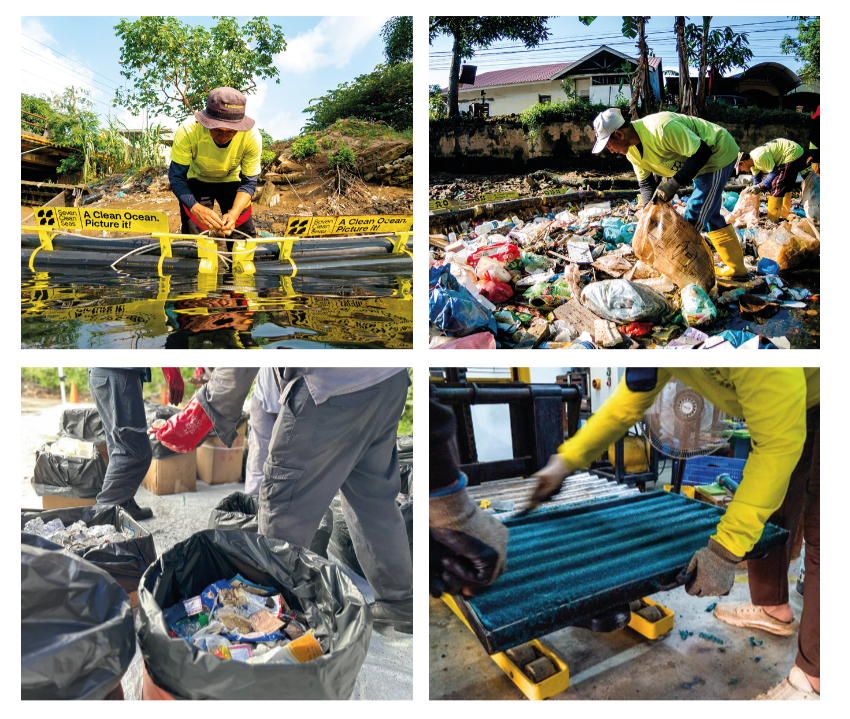
Berge Bulk has demonstrated a strong commitment to creating a positive impact on plastic waste beyond its own operations. The company actively supports Seven Clean Seas’ plastic recovery and treatment initiatives, which focus on high-impact areas in Indonesia.
In 2023, Berge Bulk provided a grant to fund the annual salaries of a team of 14 local community members, who collectively remove approximately 300,000 kg of plastic waste from coastal communities along the Beng kong River in Batam, Indonesia.
In addition, Berge Bulk has backed circularity initiatives aimed at replacing asbestos roofing on residential homes in Batam with Seven Clean Seas’ innovative roof tiles
made from ocean plastic.
Through these efforts, Berge Bulk has not only effectively reduced its fleet-wide plastic inventory, but has also extended its environmental and social impact beyond its fleet, contributing to the removal, interception, and circularity treatment of ocean-bound plastic with Seven Clean Seas.
Explore our impact in detail: www.sevencleanseas.com/[email protected] | www.bergebulk.com/responsible-business